Multi-Period Enclosure (Late Medieval to Post-Medieval)
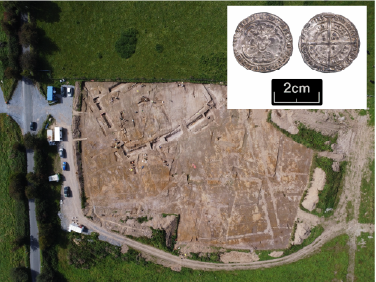
A substantial, sub-rectangular, ditched enclosure was identified at Ballinimlagh. The evidence suggests the site originated as a late medieval moated enclosure, likely constructed by colonists arriving as part of the Anglo-Norman conquest of Ireland. The evidence further suggests that the enclosure and associated paddocks remained in use (or was reused) as a farmstead into the 17th century. Documentary evidence suggestsn that this farmstead, in 1642, was owned by a William Greene who had his farmstead plundered. A written deposition recorded on his behalf states that the following were forcibly stolen from him: his cattle, horses, the corn ‘in the house’, his linen, his woollen clothes and household goods, and his garden fruits; a total loss of 28 pounds and 18 shillings. Contemporary documentary accounts suggest this same William Greene had debts to others he was unable to pay. Though unstated, it is plausible that he was unable to maintain his Ballinimlagh farmstead as a result and that the site was abandoned shortly after.
Coins Discovered
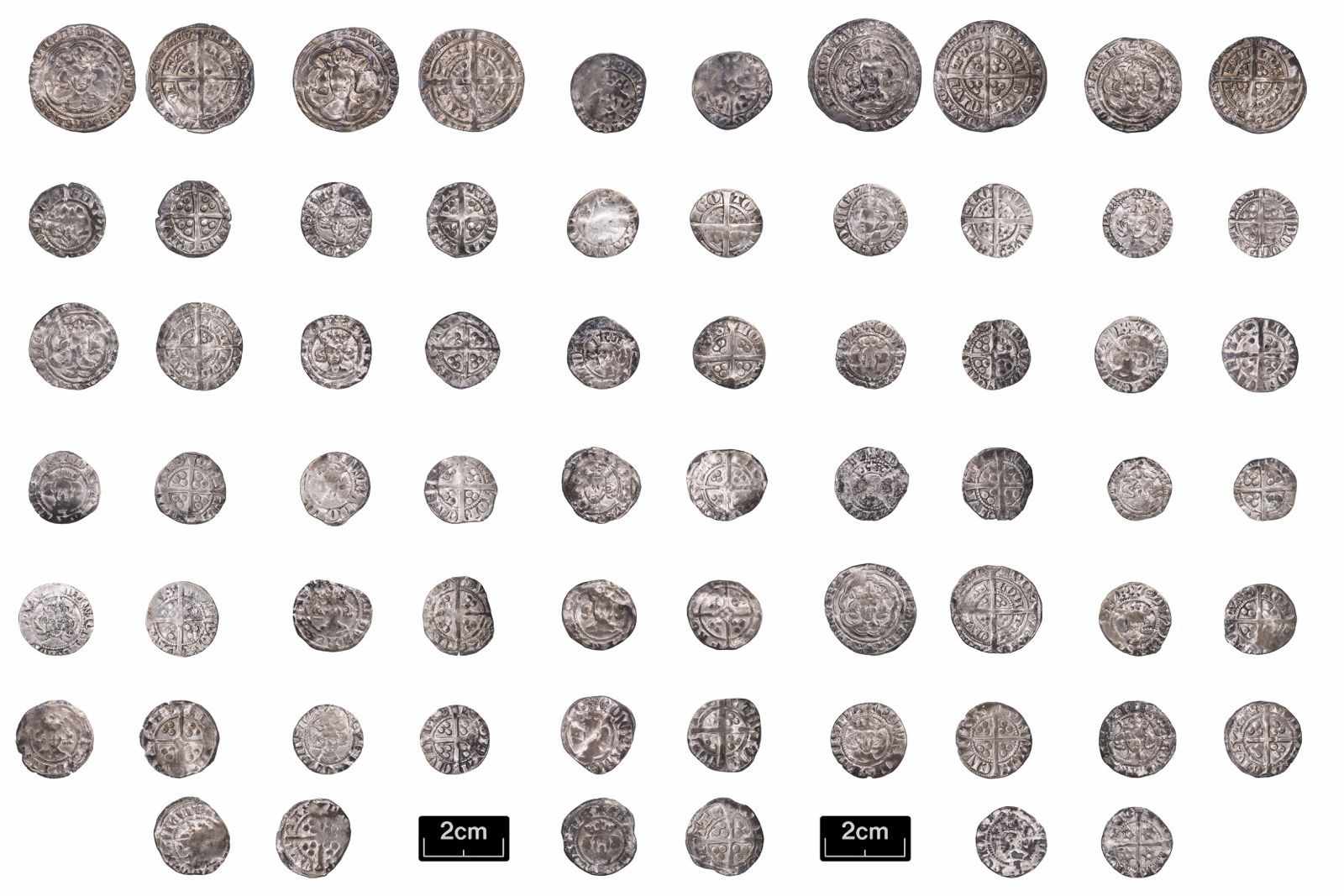
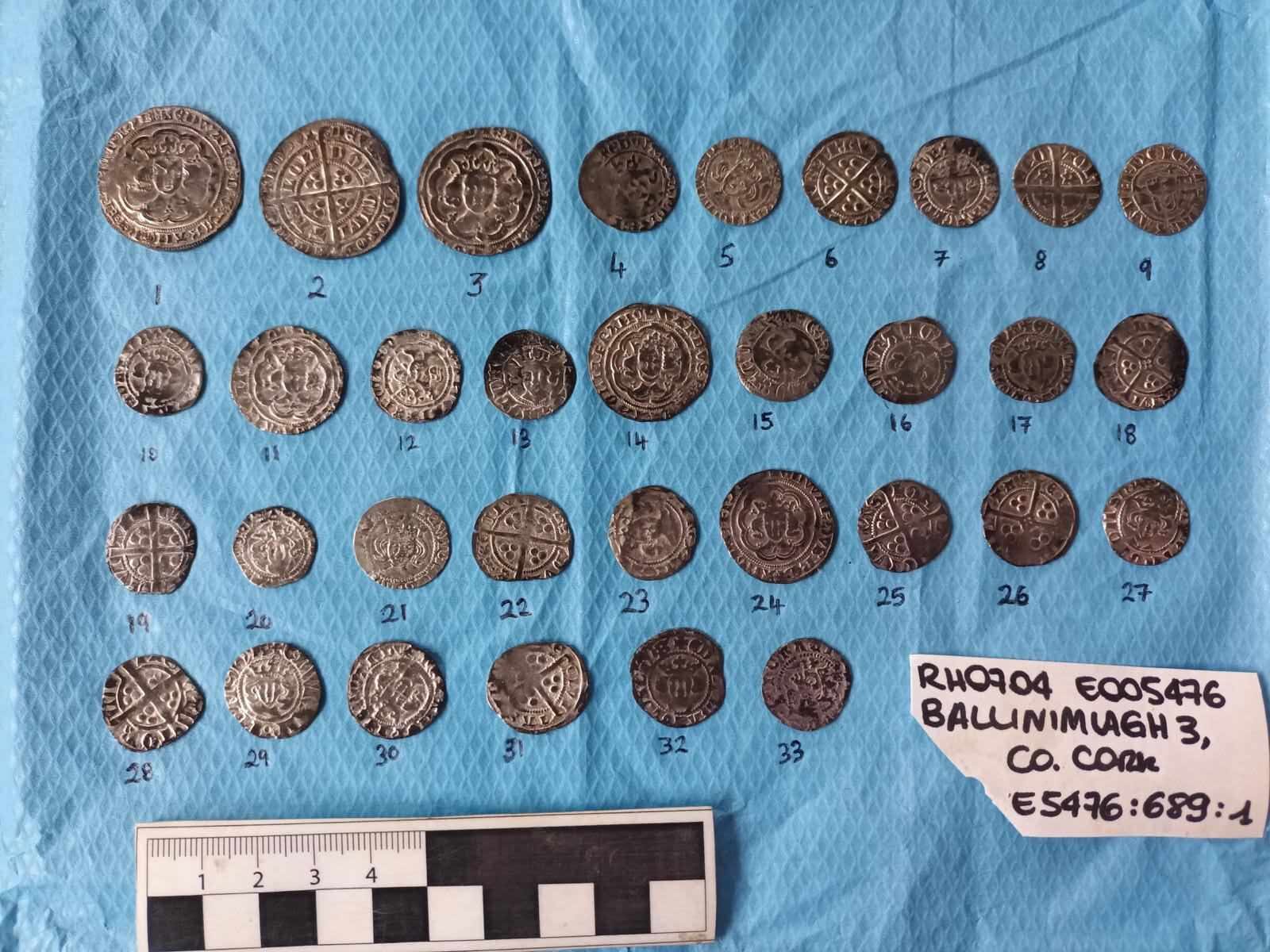
During archaeological investigations at the site, a hoard of 33 silver coins was discovered concealed within a boundary wall. The coins date to approximately 1351–1361 and include issues bearing the crowned facing busts of King Edward III of England and Alexander III of Scotland. Their presence reflects the widespread circulation of silver coinage during the medieval period, a time of active trade and political change across Britain and Ireland. The deliberate concealment of the coins suggests they may have been hidden for safekeeping, possibly during a period of unrest, and never recovered by their owner. This find provides valuable insight into medieval life, economy and connections within the region.