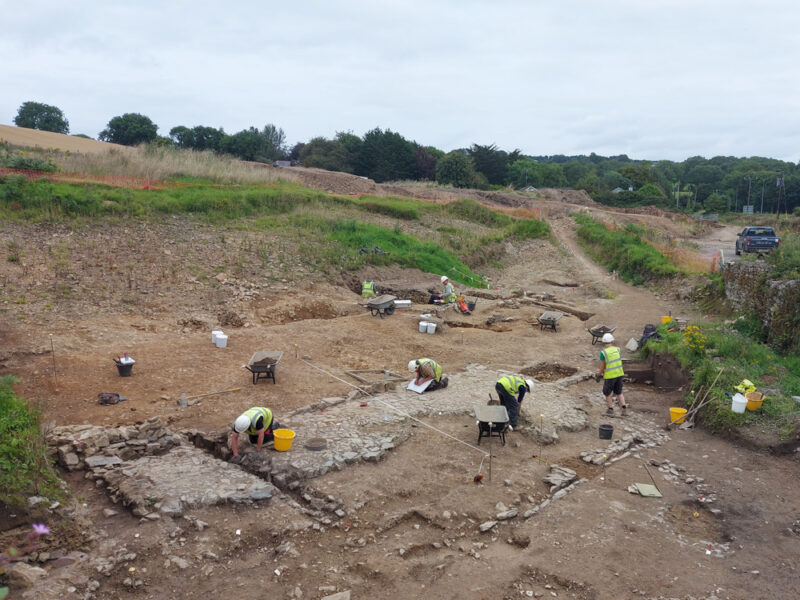
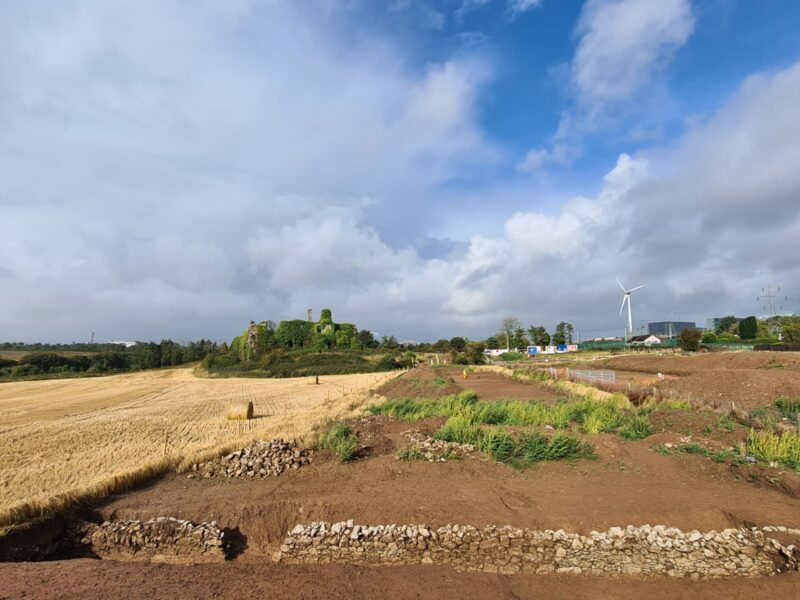
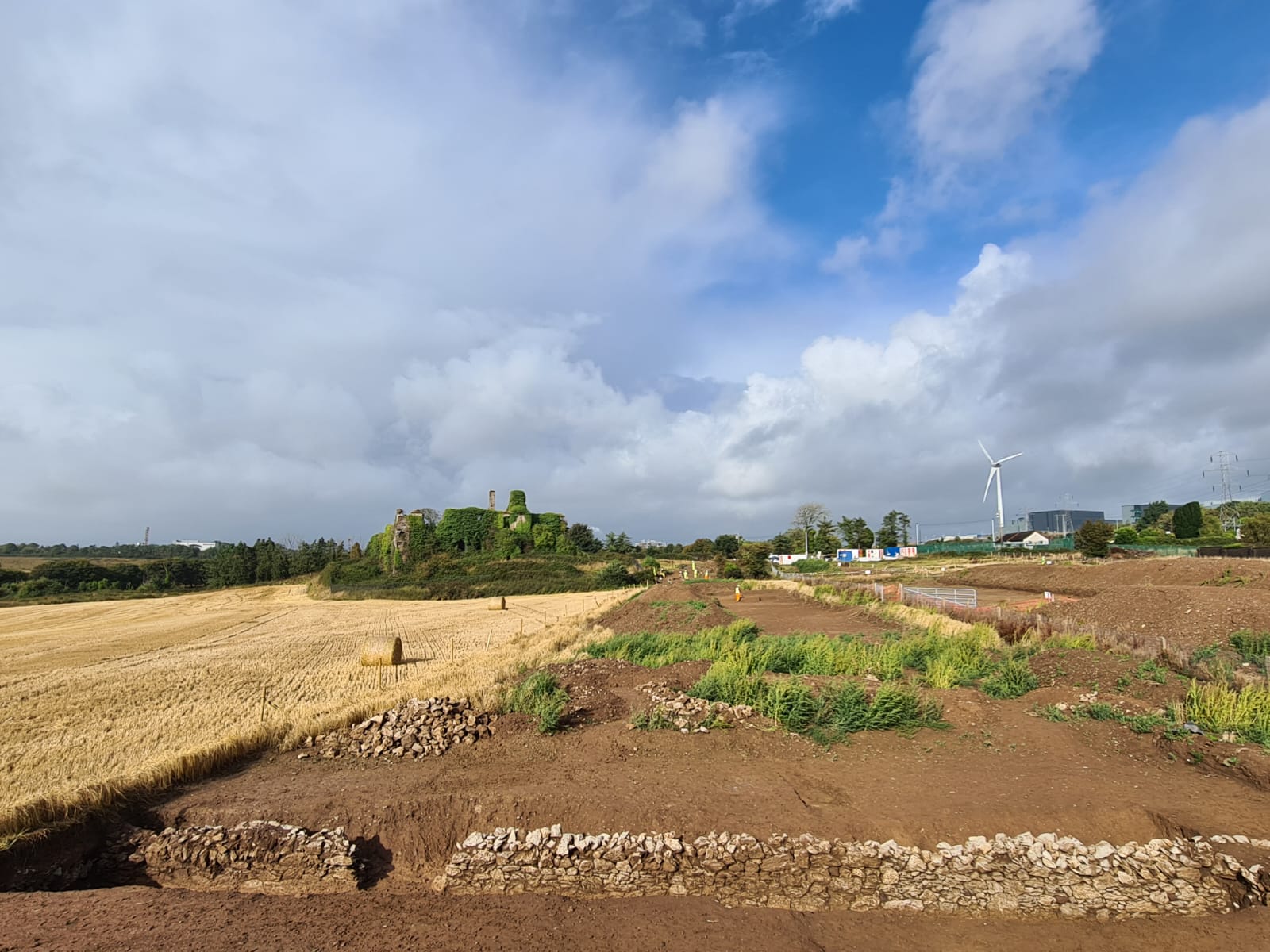
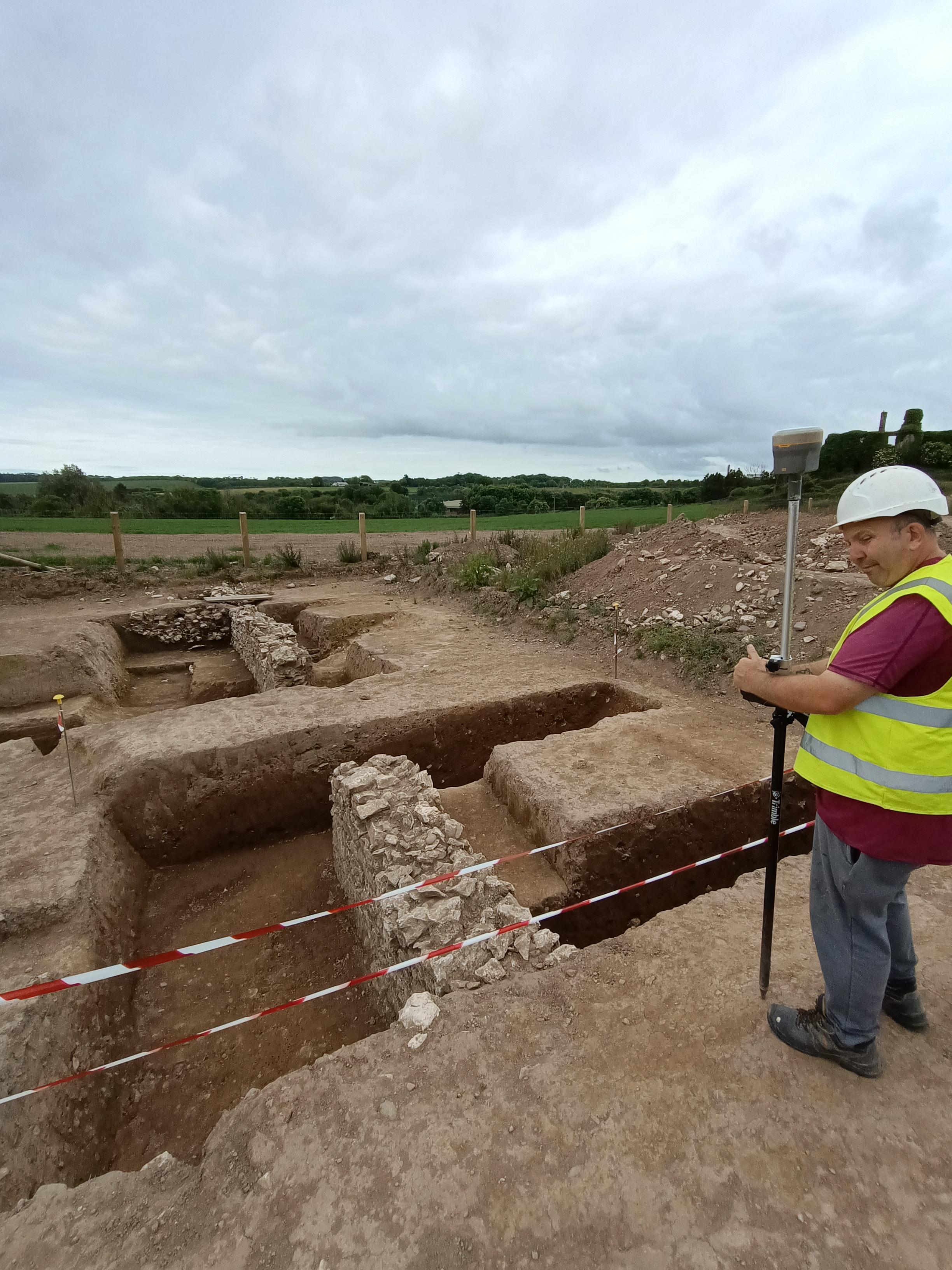
The tower house at Barnahely was occupied by the deCogan family until 1642, when the castle garrison surrendered to Lord Inchiquin. Ownership changed hands several times during the turbulent years of the mid-17th century. Barnahely Castle and its estate came into the hands of the Warren family in 1796, who construction a late 18th century house (‘Castle Warren’) directly onto the foundations of the earlier Barnahely castle, using stone from the castle’s bawn wall. This was the period of the ‘Protestant ascendancy’, where there was a boom in the construction of classical houses with demesne landscapes and associated large farms, the design of which was strongly influenced by social and architectural ideas from Britain and mainland Europe. Excavations at Barnahely 1 revealed an example of one such landscape design element known from France and England and spreading in popularity at that time—the ‘ha-ha’ ditch. These were boundaries (typically a ditch and retaining wall) cut into the ground to prevent unwanted animals entering the demesne lands, while maintaining uninterrupted views from the big house. The term ‘ha-ha’ supposedly derived from the sentiment of humorous surprise visitors expressed when seeing the hidden boundary on closer inspection.